
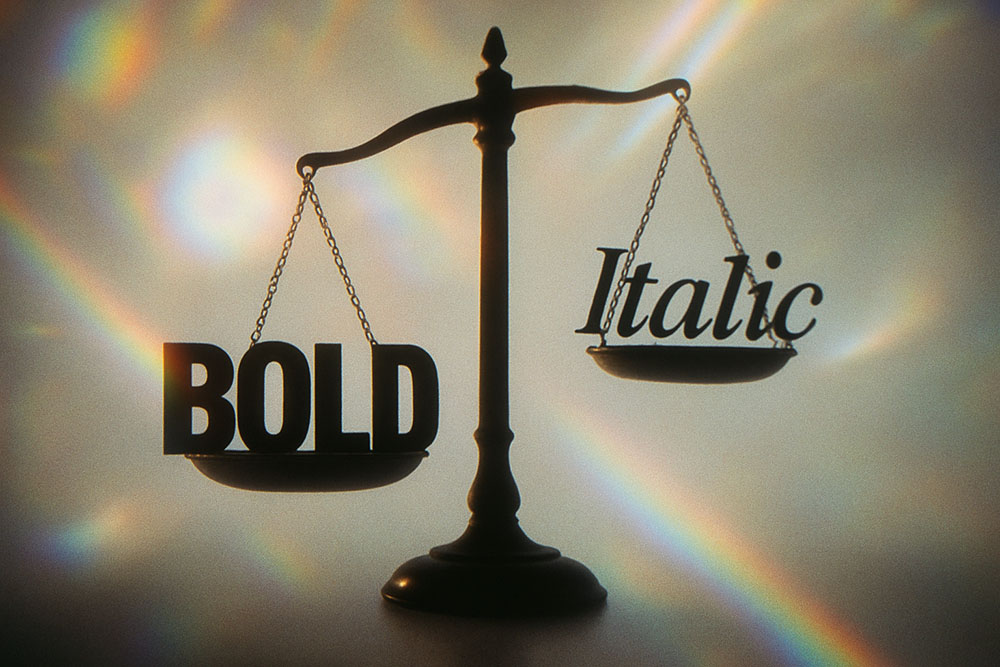
The Heavyweight vs. The Artist
When you are scanning a newspaper, a website, or an Instagram feed, what stops you? Almost always, it is big, heavy text. Bold text is the brute force of typography. It shouts "Look at me!" It creates a solid block of color on the page that acts like a stop sign for your eyes.
Italics, on the other hand, are the artists. They lean. They suggest motion. They change the "voice" of the sentence rather than just the volume. So, when you are crafting a headline, which one wins? The answer depends entirely on whether you want to stop traffic or whisper a secret.
When to Use Bold: The Anchor
For your main headline (H1), bold is almost always the right choice. You need stability. You need the reader to know immediately what the topic is. Bold fonts have a high "visual weight," meaning they feel important. If you are announcing a sale, a breaking news story, or a "How-To" guide, bold text signals authority.
Think of bold as the foundation. It tells the reader, "This is the start. Start here." If you use a thin or italic font for a main headline, it can feel weak or tentative, like you aren't quite sure if your article is worth reading.
When to Use Italics: The Nuance
Italics work best for sub-headlines or "kickers" (the little text above the main headline). They are perfect for adding commentary or context. If your bold headline is the "What," your italic subhead is the "How" or the "Why."
Italics are also fantastic for quotes within headlines. If you are writing an interview piece titled The Future of AI, adding a subtitle like "We are not ready for what is coming" creates a sense of intrigue. The slant of the letters implies a human voice speaking, rather than a corporate announcement.
Mixing Them Up
The real magic happens when you combine them. You see this in magazine design all the time. A massive, bold sans-serif header paired with a delicate, serif italic subheader creates a beautiful contrast. It is masculine vs. feminine, heavy vs. light, static vs. dynamic. It creates visual tension that keeps the reader engaged.