
The Death of the App Store?
For a decade, the mantra was "There's an App for That." Need a calculator? Download an app. Need to convert a PDF? App. Need to scan a QR code? App.
But the tide is turning. We are entering the era of the Progressive Web App (PWA) and browser-based utility. Users are tired of installing 50MB apps for a 5-second task. They want instant solutions. They want to search "remove background from image," click a link, drag a file, and be done in 10 seconds. No install. No signup. No friction.
Trend 1: Client-Side Processing (Privacy First)
The biggest shift in online tools is WebAssembly (Wasm).
In the past, if you used an online "PDF Merger," you had to upload your private documents to a server. The server processed them and sent them back. This was a privacy nightmare. Who owns that server? Are they keeping your tax returns?
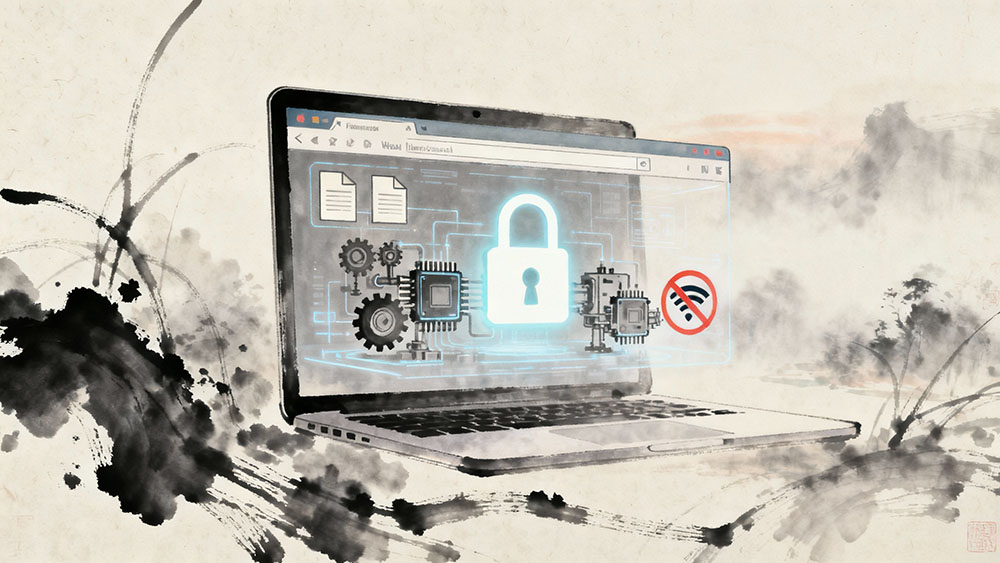
Today, modern tools run entirely in your browser. The code is downloaded once, and the processing happens on your CPU. Your files never leave your device.
- Image compression? Done locally.
- Video converting? Done locally (using ffmpeg.wasm).
- Password generation? Done locally.
This "Serverless" approach builds massive trust. It makes tools faster (no upload time) and infinitely more private.
Trend 2: The "Super-Tool" Aggregators
We are seeing a consolidation. Instead of visiting `random-site-a.com` for a color picker and `random-site-b.com` for a JSON formatter, users are flocking to "All-in-One" developer toolkits (like the one you are likely using right now).
These platforms offer a consistent UI, consistent privacy policy, and a suite of 50+ tools under one roof. It is the digital equivalent of a mechanic's workshop. You don't go to a different building for every wrench.
Trend 3: AI Integration
Simple algorithmic tools (like "Base64 Decoder") will always exist. But the next generation is AI-enhanced.
- Instead of just "Lorem Ipsum" generator, we will have "Contextual Placeholder" generators that write realistic dummy text for your specific industry.
- Instead of "Regex Tester," we will have "Natural Language to Regex" (describe what you want, get the code).
- Instead of "Color Picker," we will have "AI Palette Generator" that creates a scheme based on a mood description.
These tools won't just transform data; they will generate it.
Trend 4: Offline Capability
Thanks to PWA technology, online tools are becoming offline tools. You can "install" a website to your desktop or phone home screen. It opens in its own window, works without an internet connection, and behaves exactly like a native app. This blurs the line between "web" and "software."
The Developer Experience (DX)
Finally, tools are becoming developer-centric. They support "Pipe" operations (Output of Tool A -> Input of Tool B). They support keyboard shortcuts. They support Dark Mode. The user is no longer just a casual visitor; they are a power user who expects a professional-grade interface in a browser tab.
Conclusion
The future of online tools is fast, private, and intelligent. The days of sketchy, ad-filled sites that steal your data are ending. The new standard is local processing, clean design, and instant utility. The browser is becoming the operating system, and these tools are its essential widgets.